Last Updated: July 02, 2026
AI stopped being “a model you call” and started behaving like “a teammate that gets work done.” That shift changes what ai infrastructure has to provide in production. You are no longer wiring a single inference endpoint. You are supporting a workflow that reads specs, opens pull requests, runs jobs, reacts to real-time signals, and calls tools across your stack.
For an AI/ML platform engineer at a small company, the hard part is not building a demo. The hard part is making agentic behavior reliable, auditable, and cost-bounded without adding a DevOps tax that your team cannot afford.
This article breaks down the three forces that showed up everywhere in 2025 engineering practice. Agentic AI, MCP toolchains, and spec-driven development. Then it translates them into concrete backend patterns. The goal is simple: ship AI-powered features faster, with fewer “mystery failures,” and with infrastructure that scales when the agent goes from 50 actions a day to 50,000.
Why agentic AI changed platform engineering (and where it breaks)
Agentic AI is not just “better autocomplete.” In practice, the most useful agents do three things in a loop: they interpret intent, act through tools, then self-correct based on feedback. That loop is why agents feel productive. It is also why they are operationally scary.
The failure mode you see in production is rarely “the model was wrong.” It is more like the agent kept going when it should have stopped, or it made a correct change in the wrong tenant, or it retried a tool call until it hit a rate limit, or it triggered a slow cascade across your database and job queue.
So you end up needing platform primitives that look a lot like classic distributed systems guardrails, but with an AI twist. You need idempotency, backpressure, clear tool contracts, and an audit trail that maps “why this happened” to “what the agent believed.” You also need to handle the reality that many agent actions are writes, not reads.
A practical framing that helps: treat agent actions like untrusted automation. Even when you trust the developer running it, you still want containment. The agent should have the minimum permissions required, it should have a budget, and it should be forced to operate through stable interfaces.
MCP as the glue: designing a tool surface your agents can trust
The fastest way to make agents useful is to give them tools. The fastest way to make agents dangerous is to give them tools with inconsistent contracts.
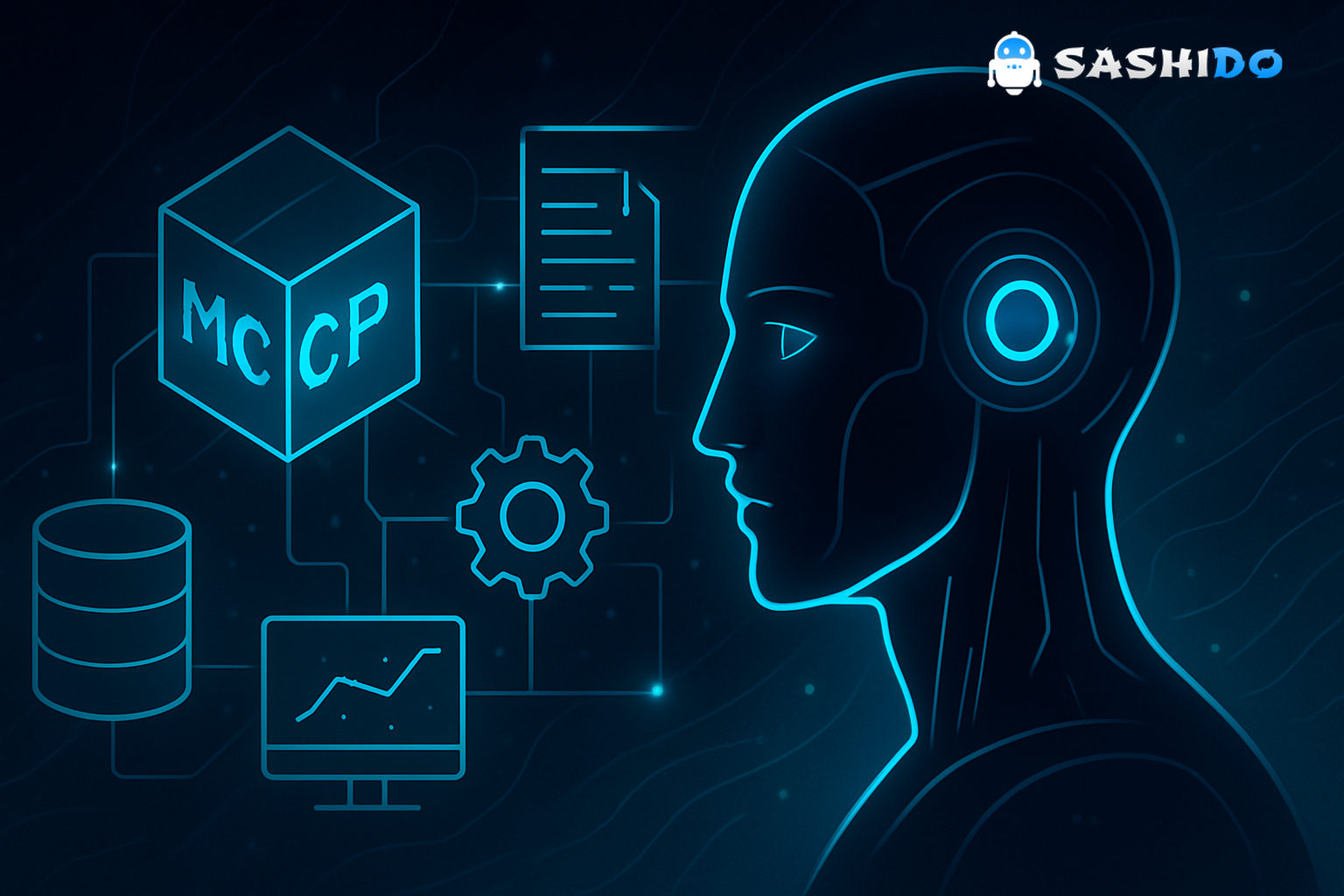
Model Context Protocol (MCP) is a strong answer to the tool sprawl problem. Instead of each agent using a different plugin format and auth story, MCP provides a consistent way for agents and tools to talk, so you can swap tools, centralize policies, and reason about capability boundaries. In day-to-day engineering, MCP becomes a “tool plane” that sits between your AI runtime and your real systems.
Where platform teams get leverage is not “supporting MCP.” It is defining the minimal set of tools that cover 80% of agent needs, then making those tools reliable. For example:
- A “read-only data” tool that can query a safe subset of collections for debugging and analytics.
- A “write with validation” tool that can create or mutate objects only if they pass schema and tenancy checks.
- A “run job” tool that schedules background work with strict parameters and rate limits.
- A “ship change” tool that can open a PR, run tests, and attach logs.
This is also where you decide what not to expose. You almost never want the agent to have raw database admin capabilities. You want it to have a constrained API shaped around your domain.
If you are using SashiDo - Backend Platform as your managed backend, that constrained surface is often easiest to express as Cloud Functions plus a clear data model. Your agent calls an MCP tool. The tool calls your function endpoint. The function enforces auth, tenant isolation, and validation. Then it writes through the database API.
The key design choice is to keep tool calls boring. Make them deterministic, observable, and easy to roll back.
Spec-driven development: treat backend contracts as executable intent
Spec-driven development quietly became the antidote to “agentic chaos.” When an agent can generate code quickly, the bottleneck moves to alignment. Are we building the right thing, and does everyone share the same definition of done.
Specs fix that by making intent the shared source of truth. In production teams, a spec is not a PDF. It is a structured artifact that can drive test generation, API scaffolding, and review.
Here is the pattern that works well for AI features:
You start by writing a small spec that defines the interface boundaries. What inputs the feature accepts, what outputs it returns, what data it reads, what data it writes, and what the failure cases are. You keep it short, and you keep it versioned.
Then, and this is the important part, you bind that spec to platform contracts. Your data model, your Cloud Function parameters, your rate limits, and your audit fields should line up with the spec. When the agent proposes changes, you review diffs against the spec, not just diffs against code.
This is where toolchains like GitHub’s Spec Kit are useful because they encourage a repeatable workflow. You do not need to adopt everything. The value is in the structure. A lightweight template plus a review loop is often enough to prevent agents from “helpfully” breaking a contract.
In a small engineering org, this can be the difference between agents accelerating delivery and agents accelerating rework.
The backend patterns agentic systems keep demanding
Agentic workflows look new, but the backend needs they create are familiar. They amplify three patterns: state, events, and long-running work.
An AI database that can keep up with tool-driven writes
Most AI features need a database, but agentic systems need one that can handle bursts of small writes. Think: tool call logs, intermediate artifacts, conversation checkpoints, evaluation results, and user-facing state.
MongoDB tends to be a good fit here because you rarely know the final schema on day one. You start with a few stable collections, then you evolve. That is why a managed setup where each app includes MongoDB with CRUD API is attractive. You can start fast and still keep control of your data model.
With SashiDo - Backend Platform, you also get user management out of the box, which matters because most agentic products end up needing per-user permissions quickly. Social login is a product decision, but permissioning is an infrastructure decision. If you delay it, agents will eventually force the issue.
Real-time sync for agent feedback loops
Agents become dramatically more useful when they can observe the system and react. That observation often needs real-time signals. For example, you want the UI to update as an agent completes steps, or you want a monitoring panel to show job status and tool failures instantly.
Real-time is not a “nice to have.” It reduces the temptation to poll, it makes agent progress visible, and it helps you catch runaway loops earlier. WebSockets are a common foundation for this kind of state sync, especially when you need low-latency updates across clients.
If your backend supports real-time sync over WebSockets, you can treat the agent as just another client. It writes a checkpoint object. Your UI subscribes to updates. Your support team can see what happened without digging through logs.
Serverless functions as the safety layer
In agentic systems, Cloud Functions are less about “running code without servers” and more about creating a policy enforcement point. It is where you centralize:
- Input validation and contract checks.
- Auth and tenant isolation.
- Rate limits and budgets.
- Observability fields, correlation IDs, and audit logs.
This matters because agents will find edge cases faster than humans. A function layer gives you one place to fix the edge case without shipping a new client.
Storage, CDN, and the “artifact problem”
Once you ship agents, you start collecting artifacts. Prompt templates, evaluation datasets, generated files, screenshots, exports, user uploads, and model outputs. If you do not plan for storage early, you end up with artifacts scattered across local disks and ad hoc buckets.
A managed object store plus CDN solves the boring part. Store anything. Serve it fast. Keep access controlled. When storage is integrated with your backend, you can attach permissions to artifacts the same way you do for database objects.
SashiDo’s file storage approach, built on S3 with a CDN layer, maps well to this. It lets you treat artifacts as first-class resources instead of incidental blobs.
Background jobs for evaluations and long-running steps
The moment you put an agent in production, you will want offline work. Batch evaluations, embedding refreshes, scheduled summaries, retries, cleanup, and periodic cost reports.
This is where scheduled and recurring jobs matter. It is also where the architecture can collapse under load if jobs are not isolated by tenant and priority.
A pragmatic approach is to define two categories of jobs: user-facing jobs with tight SLAs, and maintenance jobs that can be delayed. You then enforce that separation in your queue and in your rate limits. If you run everything in one queue with one priority, your evaluation run will eventually steal capacity from your users.
Multi-tenant backend and security: the parts agents will stress-test
In a B2B or team-based product, you almost always end up multi-tenant. Agents do not change that. They make mistakes inside it more expensive.
A solid multi-tenant backend design is not just about adding a tenantId field. It is about ensuring that every read and write is scoped, every job is attributed, every file is permissioned, and every tool call is auditable.
In practice, the best guardrail is to enforce tenancy in one of two places. Either in your data access layer, or in Cloud Functions that are the only way to mutate state. If you allow direct client writes to sensitive collections, you are betting that every client and every agent will behave correctly forever.
If you are using a managed backend-as-a-service approach, check that you can do these three things without custom infrastructure:
- Enforce object-level permissions and role-based access. Not just per endpoint.
- Keep an audit trail that ties changes to users, tools, and jobs.
- Apply policies consistently across SDKs and integrations, so a mobile app and an agent do not bypass each other.
Also, compliance stops being theoretical once you store prompts and outputs. You want clear policies for retention, deletion, and incident response. If you are evaluating vendors, read their security and privacy policies early, because retrofitting those guarantees later is painful.
Operability for ai infrastructure: latency, scaling, analytics integration, and cost
This is where most agentic projects either stabilize or spiral.
Latency and “agent time”
Agents make many calls. Even if each call is fast, the sum adds up. A one-second tool call repeated 20 times becomes a 20-second user experience.
You can often win more by reducing round trips than by optimizing the model. Batch reads. Keep tool responses compact. Cache stable metadata. Move “nice to have” enrichment into background jobs.
Placing functions close to users also matters. When your Cloud Functions run in regions near your customers, the tool loop tightens and the agent feels smarter, even when the model is unchanged.
Scaling without overcommitting
Small teams often get stuck between two bad options. Overprovision early, or get paged later.
A managed platform that lets you scale compute incrementally is the pragmatic middle ground. On SashiDo, Engines are the mechanism for scaling application performance as demand increases. The practical advice is to scale based on measurable pain. Increased request latency, queue depth, or WebSocket fan-out. Then raise capacity deliberately, and recheck.
When you talk about cost, always anchor it to current pricing, because plans change. If you are evaluating whether a backend platform fits your workload, start with the published pricing and verify how requests, storage, data transfer, and background jobs are metered on the pricing page.
Analytics integration that supports debugging, not just dashboards
Agentic systems produce a lot of events. Tool calls, retries, failures, model outputs, user actions, and time-to-completion. If you only track product analytics, you will miss operational signals.
A good analytics integration strategy splits data into two streams. Product metrics for understanding usage and retention, and operational metrics for understanding failures and cost. Then you add correlation fields so you can trace a user complaint back to tool calls and database writes.
If you already have an observability stack, keep it. The goal is to make your backend emit clean events. Not to rebuild monitoring from scratch.
Push notifications as the “async UI”
Not every agent step can finish in a single session. When a job completes later, you need a way to re-engage users and close the loop. Push notifications are a common answer for mobile-first products, especially when you want to announce “your report is ready” or “your import finished.”
If your backend includes push notifications without extra per-message complexity, it removes another piece of glue code that platform teams often end up owning.
A quick trade-off check when choosing a backend
If you are comparing backend services, the question is not “which has more features.” It is “which reduces operational surface area while keeping me in control of data and contracts.” If your current approach is Firebase, Supabase, or self-hosted Parse, it is worth reviewing the specific trade-offs in a like-for-like comparison before you commit long term.
For reference, SashiDo maintains comparison pages that walk through differences in architecture and control, including SashiDo vs Firebase, SashiDo vs Supabase, and SashiDo vs Self Hosted Parse.
A rollout plan that keeps momentum without losing control
If you are trying to move from prototype to production, this phased approach tends to work.
First, define your tool boundary. Decide which actions the agent can perform in production, and force all actions through a small set of tools. Add budgets and rate limits early, because it is easier to relax them later than to explain a surprise bill.
Second, write thin specs for each tool and for the key data contracts. Keep them versioned. Make them reviewable. Tie tests to them. When the agent proposes changes, you review against the spec so you can spot scope drift quickly.
Third, build the backend skeleton that supports the loop. A database for state, functions for policy, storage for artifacts, jobs for async work, and real-time for feedback. You can stitch this together yourself, but many teams move faster by adopting a managed backend and focusing effort on contracts and product logic.
Fourth, operationalize. Add correlation IDs, persist tool call logs, and define SLOs for the agent loop. Time to first action, time to completion, failure rate by tool, and cost per successful task are usually more useful than generic latency percentiles.
Finally, scale deliberately. Measure bottlenecks, then scale compute, storage, and job concurrency based on actual load. If you need higher availability, plan it as a product requirement, not as a last-minute patch.
Sources and further reading
If you want to go deeper on the building blocks behind these patterns, these references are worth keeping nearby because they are stable and implementation-oriented.
- The Model Context Protocol documentation explains the core concepts and interoperability goals behind MCP, which helps when you design a consistent tool surface. See the official docs at Model Context Protocol.
- GitHub’s announcement of a built-in coding agent is a good snapshot of how “assign the task, get a PR back” is becoming a standard workflow. Read GitHub Copilot meet the new coding agent.
- Spec-driven development becomes much easier when you use a structured workflow. GitHub’s open source toolkit is documented at GitHub Spec Kit and Spec Kit documentation.
- Real-time client sync is usually grounded in WebSockets. MDN’s overview is a reliable starting point. See WebSockets API.
- If you are standardizing around MongoDB, the CRUD reference is useful for aligning data access patterns and performance expectations. See MongoDB CRUD operations.
If you want to validate these patterns quickly, you can explore SashiDo’s platform with SashiDo - Backend Platform and stand up a managed MongoDB backend, Cloud Functions, real-time sync, and storage as a concrete ai infrastructure baseline for your agentic workflows.
