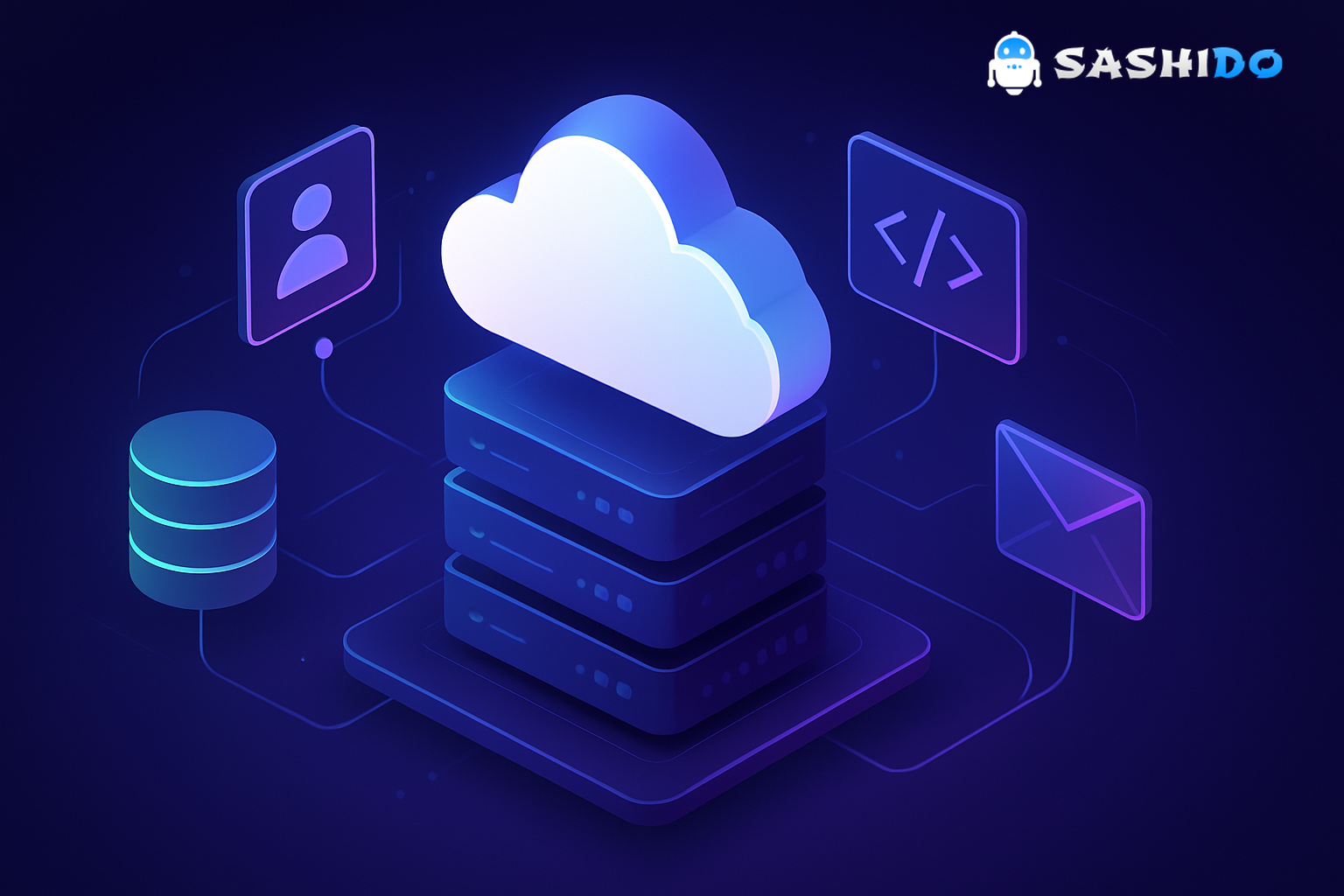
Launching an app rarely fails because the frontend is hard. It fails because the backend is a pile of small, time-consuming responsibilities that show up all at once. Authentication, data modeling, file storage, real-time updates, background jobs, scaling, monitoring, security reviews. This is why backend as a service and backend deployment platforms exist. They turn backend “plumbing” into something you can provision, iterate on, and operate without becoming a part-time DevOps team.
If you are an early-stage founder trying to ship a production-grade MVP quickly, the best platform is usually the one that removes the most risk from day one. Not just the risk of slow development. Also the risk of outages, runaway costs, and a painful rewrite when you learn what users actually want.
What a backend deployment platform actually deploys (and why it matters)
In practical terms, a backend deployment platform is the layer that takes your backend requirements and turns them into managed, running services: a database, an API surface, authentication, file storage, compute for business logic, plus the operational pieces that keep everything reliable.
The difference between “I have a backend” and “I can launch” is usually the operational glue. TLS. Backups. Environment separation. Logs you can trust. The ability to roll out a change without taking the system down. Many teams underestimate this until the first on-call incident or the first customer that asks about GDPR, retention, and auditability.
A good platform does not just host code. It standardizes the hard parts so you can repeat them across apps and environments.
Further reading: the general definition of BaaS is well captured in the overview of Backend as a service, but the day-to-day value is in how platforms package the repeatable backend work.
Why founders and small teams keep choosing BaaS cloud for MVPs
When you are pre-PMF, speed is not a luxury. It is your main risk reducer. Every week spent wiring auth, writing CRUD endpoints, and setting up storage is a week you are not learning from real users.
In the real world, teams adopt BaaS services for a few consistent reasons.
First, time-to-first-value. You want to go from “database schema idea” to “working signup plus first data saved” in hours, not sprints.
Second, predictable operations. If you do not have a dedicated DevOps person, the platform has to cover monitoring, scaling knobs, backups, and safe deploys so the team can stay focused on product.
Third, portability. Early on, pivots are normal. Vendor lock-in becomes a problem when your backend choices are so proprietary that changing direction means rewriting everything.
This is where SashiDo - Backend Platform fits particularly well for early-stage products. It is a fully managed backend that can get you production-ready in minutes, but it is also built around an open-source Parse Server foundation. That combination is what you want when you need speed now and flexibility later.
Features that make a platform stand out in production
Most platforms can get you through a demo. The ones that keep working after launch are the ones that cover the “boring but fatal” edge cases: authentication flows, real-time fan-out, file delivery latency, background retries, and the ability to scale without breaking your budget.
Database and CRUD APIs that do not slow you down
For most MVPs, you need a database and a safe way to read and write data from clients without hand-building every endpoint. Platforms that provide a database plus a CRUD API save an enormous amount of time, especially when requirements change weekly.
SashiDo apps come with MongoDB plus a CRUD API, so you can start shipping features immediately and still evolve the data model as you learn. If you need a refresher on what “CRUD” really implies at the database layer, MongoDB’s guide to CRUD operations is a solid grounding.
The practical test here is simple. Can you add a new feature, like a “saved items” list, without creating a mini framework of controllers, migrations, and access rules that only one person understands.
Authentication options for your mobile backend that match reality
Authentication always looks easy until you ship.
In the MVP phase, you usually need email login plus at least one social provider, because users do not want new passwords. Then you need password resets, session handling, and the ability to revoke tokens when something looks suspicious. Soon after, you need granular permissions, and you need to know where user data lives and who can access it.
SashiDo includes a full user management system and supports social login providers like Google, Facebook, GitHub, Azure, GitLab, Discord, and more with minimal setup.
From a security standpoint, do not treat authentication as “done” when login works. Treat it as done when you have a defensible posture: safe password handling, session expiration, MFA where needed, and consistent authorization rules. OWASP’s Authentication Cheat Sheet is a practical reference for what “good enough” should actually include.
Real-time sync that does not collapse under load
Real-time is a feature founders ask for because it improves retention. It is also a feature teams fear because it can amplify load, complexity, and debugging pain.
The key is understanding that real-time systems are not just about pushing data. They are about state synchronization and predictable fan-out. Modern apps use WebSockets to keep a persistent connection and deliver updates without constant polling. MDN’s overview of WebSockets is a good baseline for what is happening under the hood.
With SashiDo, you can sync client state globally over WebSockets in real time, which is particularly useful for collaborative screens, live dashboards, on-demand marketplaces, and any experience where waiting for refresh feels broken.
The reality check: if you cannot explain how your real-time layer behaves during a spike, it will surprise you in production. Look for clear connection limits, observability, and a scaling story that does not depend on heroic manual interventions.
Storage plus CDN, because file delivery is part of UX
A surprising number of MVPs end up handling files early. User avatars, receipts, audio clips, PDFs, product images, model outputs. If you do not plan file storage and delivery, you will eventually ship a slow app that “works,” but feels unreliable.
SashiDo provides an object store backed by AWS S3, with CDN integration so content can be delivered quickly and scaled without you managing the edge layer.
If you want to understand the underlying primitives, AWS’s docs on Amazon S3 and the CloudFront guide on speeding up S3 websites with a CDN map directly to the real-world concerns: latency, cache behavior, and global delivery.
Serverless functions for the code you cannot avoid
Even in BaaS, you will need backend code. Usually for payments, webhook verification, scheduled rollups, data enrichment, moderation, or “glue” between third-party APIs.
The important distinction is not whether you write backend code. It is whether you have to provision and babysit the servers that run it.
SashiDo lets you deploy JavaScript cloud functions quickly, with regions in Europe and North America, plus monitoring so you can see failures instead of hearing about them from users.
A practical rule: push business logic to serverless functions when it is security-sensitive, requires secrets, or must be trusted. Keep client logic for UI composition and optimistic interactions.
Background jobs and recurring work that stays predictable
Every app grows into background work: daily digests, cleanup tasks, retrying failed operations, scheduled sends. If you do not have a place for these, they end up as fragile cron scripts or “temporary” functions that become permanent.
SashiDo supports scheduled and recurring jobs (MongoDB plus Agenda) managed through the dashboard. This matters because recurring work becomes the backbone of retention and analytics once you start iterating quickly.
Push notifications that are actually part of the product loop
Push notifications are not marketing. In early-stage products, they are usually the shortest path back to the user. But they only work when delivery is reliable and segmentation is under control.
SashiDo supports mobile push notifications for iOS and Android across platform SDKs. That becomes valuable when you want to run simple experiments, like comparing a weekly summary push versus event-based nudges, without rebuilding infrastructure.
Policies, compliance, and “can we pass procurement” readiness
Even startups get asked security questions earlier than they expect. A pilot customer might ask about GDPR. An enterprise integration might ask about data processing terms. Even a small B2B customer might ask for a support policy.
For credibility and clarity, it helps when the platform has documented policies you can point to during due diligence. SashiDo publishes its Policies, including security and privacy information.
For GDPR context, the European Commission’s overview of the GDPR is a useful reference for the user rights and obligations that tend to drive backend requirements like deletion workflows and data access logs.
How deployment platforms change team workflow (beyond code)
Teams often think they are buying “hosting,” but they are really buying a workflow.
A strong backend deployment platform reduces coordination cost. When auth, database, functions, jobs, and file storage are in one place, you get faster reviews and fewer integration surprises. When dashboards, permissions, and collaborators are built-in, you spend less time creating internal tools that no customer will ever pay for.
This is where managed platforms earn their keep in small teams. You can keep a tight loop: ship, observe, fix, repeat. You also reduce the “single person knows the infrastructure” problem because the operational model is standardized.
SashiDo includes unlimited collaborators, platform monitoring, and a dashboard-driven approach that fits a 1 to 5 person team that needs to move fast without giving up basic operational discipline.
Auto-scaling and surviving the first real traffic spike
Most early-stage teams do not need massive scale on day one. What they do need is graceful scaling on day thirty, when a launch post hits or an integration partner sends traffic.
The failure mode is predictable. The app’s core loop works fine at 50 users. Then you add real-time updates, a few background jobs, and an image-heavy feed. Suddenly, database contention grows, the API slows down, and you start firefighting instead of building.
A practical scaling approach looks like this:
- Start with sensible limits and monitoring so you can see what is happening.
- Scale the compute and data paths that are actually saturated, not everything.
- Treat real-time and background jobs as first-class workloads, because they create bursty patterns.
SashiDo’s “Engines” are designed for this exact phase shift. They let you scale and improve performance without redesigning your stack. The best way to understand when to change engine types and how cost is calculated is the platform’s explanation of the Engines feature.
If you are evaluating “auto-scaling” claims from any backend as a service providers list, ask one specific question: what do I scale, how fast does it happen, and how do I avoid surprise bills. A platform that can answer those plainly is the one you can trust.
Choosing among backend as a service providers without guessing
Most comparisons on the internet reduce this decision to logos and feature checkboxes. In practice, your best choice depends on your risk profile.
If you are an early-stage founder, your priorities tend to be: shipping speed, low operational burden, predictable costs, and the ability to pivot without rewriting your backend server for mobile apps.
A useful way to decide is to walk through the trade-offs that show up after launch.
1) How fast can you ship the core loop
The “core loop” is usually: onboarding, authentication, a primary object saved to the database, and a way to retrieve it efficiently. If you cannot build that in a day, the platform is not buying you speed.
SashiDo’s documentation and SDK guides help here. When you need implementation-level clarity, the Docs are the resource you want open while building.
If you prefer a guided path to your first deploy, the Getting Started guide is built around the same reality most MVPs face: you want something running quickly, then you want to iterate without replatforming.
2) What happens when you need real-time and background work together
Real-time features often force architectural decisions early. Background jobs add another layer of operational risk. A platform that treats both as add-ons can create messy edge cases.
Look for a platform that has a coherent story for WebSockets, job scheduling, retries, and monitoring, because this is where most MVP backends become brittle.
3) Can you keep an exit option
Vendor lock-in is not always bad. It is bad when it is accidental.
If you are building on an open source backend foundation, your portability story tends to be clearer because you can move the runtime and data model without rewriting your entire app. If portability is important to you, “ai-ready backend with open source Parse Server” is not just a keyword phrase. It is a practical hedge against your own pivot.
If you are weighing proprietary ecosystems versus more portable stacks, it can help to review a concrete comparison, for example SashiDo vs Firebase, specifically through the lens of portability and the operational surface area you will own.
4) Is pricing predictable at MVP scale
At MVP stage, you want to avoid billing surprises. You also want a clear path to scale when traction arrives.
SashiDo offers a 10-day free trial with no credit card required. For current plan details, included quotas, and overage pricing, use the live Pricing page because these numbers can change over time.
A practical approach is to estimate your first three months using real product assumptions: number of monthly active users, expected request volume, file sizes, and push notification patterns. Then choose the platform that gives you the fewest “unknown unknowns” in the bill.
Launch strong with an AI-ready backend and a platform you can trust
A lot of teams are now building features that look like “AI,” but behave like standard backend problems: storing prompts and outputs, streaming partial responses, managing rate limits, and keeping user data separated.
This is where a managed Parse-based approach is useful. You get a backend model that supports typical app requirements, while still being flexible enough to integrate external AI services through functions and jobs.
SashiDo - Backend Platform is also not a new or unproven system. Since 2016, it has been used by 700 plus companies across 100 plus countries, with 12K plus developers and 19K plus apps. The platform reports high request peaks and large-scale push delivery, which is the kind of operational track record you want when your MVP turns into a real product.
The goal is not to pick the most feature-heavy product on paper. The goal is to pick the platform that helps you ship, survive your first growth spike, and keep your options open if the product changes.
Conclusion: backend as a service is a deployment decision, not a shortcut
Choosing backend as a service is not “avoiding engineering.” It is choosing to spend engineering time where it differentiates your product. The best backend deployment platforms remove the repetitive work, standardize security and operations, and give you a path to scale without panic.
If your priority is to launch a backend server for mobile apps quickly, add real-time and push notifications without becoming a DevOps team, and still keep portability through an open-source Parse foundation, consider one small next step.
You can explore SashiDo’s platform at SashiDo - Backend Platform and start a 10-day free trial. When you are ready to estimate costs, verify the latest plan details on the Pricing page.
Sources and further reading
- Backend as a service (BaaS) overview for baseline terminology.
- MongoDB CRUD operations for the database primitives most BaaS layers wrap.
- WebSockets API documentation for real-time connection behavior.
- AWS CloudFront and S3 performance guidance for storage and CDN delivery fundamentals.
- OWASP Authentication Cheat Sheet for pragmatic authentication hardening.
- EU GDPR overview for compliance-driven backend requirements.
