Last Updated: April 14, 2026
AI coding agents are everywhere now, and most SaaS CTOs have the same question hiding behind the hype: Can we let agents ship real backend changes safely, or are we just accelerating the creation of future incidents? In the cloud mobile backend as a service market, the difference between a fast week and a painful quarter is usually not “how much code you can generate”. It is whether you can keep correctness, security, and operability intact while shipping continuously.
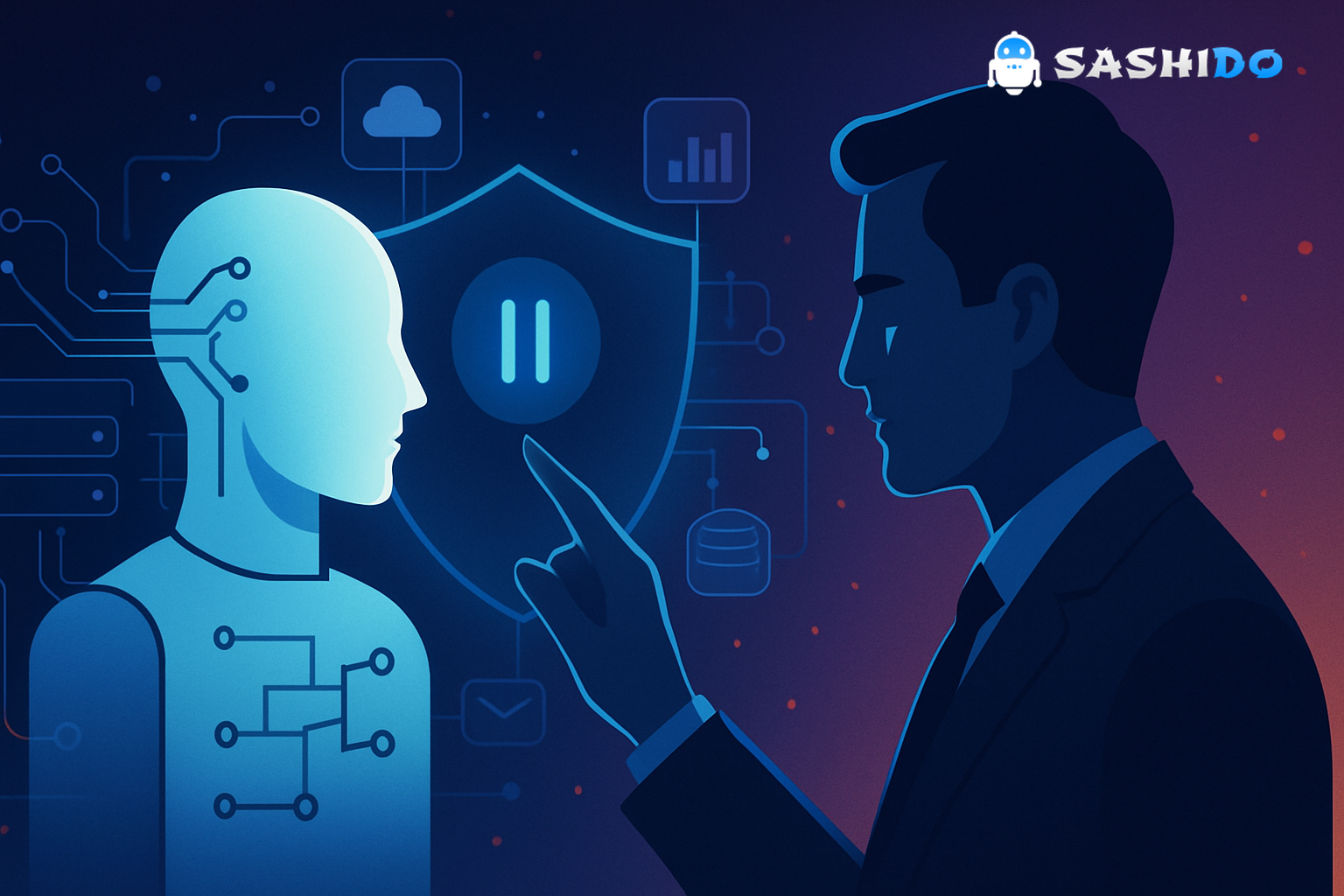
What experienced developers have converged on in practice is simple. Agents are useful, sometimes dramatically so, but they are not a substitute for design ownership. The teams that get real leverage treat an agent like an extremely fast junior collaborator. They give it small, well-scoped tasks, verify everything, and keep architectural and business logic decisions firmly human-owned.
What expert developers do differently with AI agents
The biggest mismatch between social media narratives and production reality is autonomy. In real teams, developers rarely hand an agent a vague goal and disappear. They instead keep tight control over design, scope, and review, because they know where failures actually show up: in edge cases, data flows, integration boundaries, and the operational tail.
A useful mental model is that agents are great at local reasoning and weak at global correctness. When the task is contained, the context is complete, and the acceptance criteria are explicit, agents can save days. But when the task crosses multiple modules, touches privacy-sensitive flows, or depends on implicit domain rules, agents can confidently generate plausible nonsense.
This is why the best teams don’t “vibe” with the tool. They steer. They plan. They validate in tight loops. They keep the system understandable for humans who will be on call.
If you want a concrete sign that you are doing it right, look for this pattern. Your engineers are not asking for an agent to implement a feature end-to-end. They are asking for two to five specific changes, then they run tests, read diffs, and decide what comes next.
Why “vibe coding” breaks first in SaaS backends
Backends are where ambiguity turns into outages. In SaaS, especially multi-tenant SaaS, the backend encodes the rules that decide who can do what, to which data, under which constraints. That is also where integration friction lives: existing schemas, existing APIs, existing audit requirements, existing rate limits, existing billing, and existing operational runbooks.
Agents struggle disproportionately here for three reasons.
First, business logic is not a generic programming problem. It is the product. A billing edge case, an entitlement rule, or a tenant isolation invariant is not something you can “guess” safely. Even if the agent writes code that passes a shallow happy-path test, it can still be wrong in the ways that matter.
Second, backends are integration-heavy. The moment you are modifying an existing codebase, you are dealing with non-obvious contracts. That includes things like backward compatibility, database migrations, event ordering, retries, and idempotency. Those contracts are rarely fully captured in code comments, and they are almost never fully captured in the agent’s prompt.
Third, the backend is where security and abuse show up. If you build APIs, you are exposed to the reality described in the OWASP API Security Top 10. Risks like broken object level authorization or unrestricted resource consumption often emerge from tiny logic mistakes. Those are exactly the mistakes “looks correct” code generation can introduce.
A workflow that actually works: small steps, tight validation
The most reliable AI-assisted workflow looks less like delegating and more like pair programming with a very fast typist.
Start with an explicit plan that a human would sign their name under. Some teams keep a living plan file or a short design doc. The important thing is not the document. It is that the design decisions are made intentionally, not accidentally as a side effect of what the agent generated first.
Then break work into small tasks that are easy to validate. A practical ceiling is “a change that fits in one diff and can be tested in minutes”. That might be a single endpoint change, one data access refactor, or one new background job.
Here is a scannable checklist you can adopt without changing your toolchain:
- Constrain scope: specify exact files, functions, and acceptance criteria.
- Provide real context: schema, API contracts, example payloads, error messages, and constraints.
- Demand test updates: not just new code, but what changes in tests and why.
- Validate immediately: run linters, unit tests, and a minimal integration check after each step.
- Review diffs like production code: because it is production code.
This approach maps cleanly to CTO KPIs. Small steps reduce change failure rate. Tight validation reduces mean time to recover. And when engineers stay in control, you avoid the slower failure mode where the team spends days unwinding a large, agent-generated tangle.
For teams evaluating backend platforms, this is also where your platform choice matters. The more your backend is already standardized, observable, and well-documented, the less you are asking an agent to invent.
Quality attributes beat raw speed in production environments
A useful reality check is that experienced developers tend to optimize for quality attributes even when productivity gains are available. That aligns with what matters at SaaS scale: correctness, readability, maintainability, deployability, reliability, and performance.
This is also where AI changes team behavior in a subtle way. When it is cheap to generate tests, refactors, and documentation, teams can increase coverage and improve internal clarity. But only if engineers treat those outputs as drafts to be verified, not artifacts to be merged blindly.
If you want an external anchor for “what good looks like” at the organizational level, map your AI-assisted workflow to the NIST Secure Software Development Framework (SSDF). SSDF is not about AI specifically, but it captures the core practices you need regardless of how code is produced: defined requirements, secure design, controlled changes, verification, and continuous improvement.
On the delivery side, keep your measurement grounded in outcomes, not vibes. DORA’s software delivery metrics remain a solid baseline, especially around deployment frequency, lead time, change failure rate, and recovery. The 2024 DORA report is a good reference for how high-performing teams connect developer experience to delivery performance, and it helps frame AI as a lever that still requires good system design.
Backend platforms can make AI safer by shrinking the “unknown surface area”
When agents fail, they usually fail at boundaries. Database migrations, authentication flows, file handling, real-time synchronization, background execution, and observability are all areas where “almost correct” is still wrong.
This is why many SaaS CTOs are re-evaluating their backend foundation, not just their coding tools. In the cloud mobile backend as a service market, a managed platform can reduce DevOps load and reduce the number of bespoke components an agent has to reason about.
With a platform approach, you standardize the primitives your product is built on. That includes a consistent API for developers, predictable database access patterns, and a repeatable way to handle storage, real-time events, and serverless logic. Fewer custom moving parts means easier review, faster onboarding, and less risk that an agent will “invent” an integration that only works in the prompt.
For example, if your baseline includes a known data model, consistent CRUD conventions, and predictable query behavior, it is easier to validate agent outputs. If you need a reference point for how CRUD behavior is defined at the database level, MongoDB’s own CRUD documentation is a concise grounding source.
This is one reason teams adopt a managed backend like SashiDo - Backend Platform. It gives you a production-ready backend stack quickly, including database, real-time sync, storage with CDN, cloud functions, push notifications, and analytics. When you combine that with human-controlled agent workflows, you can keep your engineers focused on product logic and governance rather than rebuilding undifferentiated infrastructure.
Database integration and auth are where autonomy goes to die
Two areas repeatedly punish “hands-off” AI use: database integration and authentication/authorization.
Database integration is hard because the database is a shared truth. If an agent writes a migration or modifies a query without understanding cardinality, indexing, multi-tenant partitioning, or existing reporting jobs, you can end up with performance regressions and data quality incidents that are hard to attribute.
Auth is even more unforgiving. Many SaaS teams start with a third-party identity provider, then later discover constraints around tenant-level policy, session management, or enterprise SSO. This is where the keyword auth0 alternatives shows up in real procurement conversations. It is not about branding. It is about control, integration, and cost over time.
No matter which direction you choose, the important point for AI-assisted development is that auth logic should be treated as high-stakes code. That means stricter review, stronger tests, explicit threat modeling, and ideally relying on well-understood platform capabilities rather than ad hoc implementations that “seem to work”.
If you want to standardize more of this surface area, SashiDo - Backend Platform includes built-in user management and social login providers that are configured rather than reinvented, which can reduce the amount of custom auth code an agent is asked to generate.
Picking a cloud service provider when AI is in the loop
AI doesn’t remove the need to choose a strong foundation. It increases it.
As a SaaS CTO, your backend stack has to satisfy constraints that agents do not naturally optimize for. You need predictable costs, clear scaling levers, compliance posture, low operational burden, and enough flexibility to avoid lock-in. You also need a system your team can understand and maintain after the initial “speed boost”.
When evaluating a cloud service provider or a backend platform in 2026, add one more lens: How well does this platform support human-controlled automation?
In practice, that means:
- Can you make changes incrementally and roll them out safely.
- Do you have strong observability, so validation is faster.
- Are the primitives standardized, so agents can generate consistent changes.
- Can you keep control over data and portability, so “AI speed” does not become lock-in risk.
If you are currently comparing managed backends, it is reasonable to sanity-check trade-offs against common defaults like Firebase. If that is in your evaluation set, keep the discussion anchored to real constraints like multi-tenant data modeling, observability, and long-term portability, and use a focused comparison such as SashiDo vs Firebase rather than generic marketing claims.
Practical guardrails for agent-assisted application development
Agent-assisted application development works best when you make the rules explicit and make verification cheap.
A practical set of guardrails that has held up across teams looks like this.
First, declare a few non-negotiables: security boundaries, tenant isolation, data retention and deletion rules, and performance SLOs. Agents should never be making those decisions implicitly.
Second, require that every non-trivial change comes with a measurable verification step. If the agent touches an API endpoint, you should be able to validate authorization and resource consumption. If it touches a query, you should be able to validate latency and index usage. If it touches an async job, you should be able to validate idempotency and retry behavior.
Third, make it socially acceptable to abandon the agent mid-task. One of the most expensive failure modes is spending hours iterating prompts to coerce an agent into producing a clean change, when a human could implement it directly faster. Teams that get value from agents are not those who use them all the time. They are the teams that switch intelligently.
Finally, protect the codebase from “agent sprawl”. If the tool consistently generates verbose, duplicated, or inconsistent patterns, fix it at the source by providing project rules, reference implementations, and small examples. You are training your workflow, not the model.
The strategic takeaway for CTOs
AI can compress time-to-first-draft. It does not compress the responsibility of shipping and operating production systems.
For SaaS backends, the highest leverage pattern is to combine human-owned design with incremental, verifiable agent execution. This is also where your choice of database platforms and backend foundation pays off. Standardized primitives and managed operations reduce the chaos an agent can introduce, and they help your team keep velocity without sacrificing correctness.
When you apply this lens to the cloud mobile backend as a service market, the winners are rarely the loudest tools. They are the platforms that reduce integration friction, keep governance intact, and let your team ship in small, safe steps.
If you are trying to keep engineers in control while still moving faster, it can help to standardize the backend surface area first. You can explore SashiDo’s platform to get managed database, realtime sync, serverless functions, CDN-backed storage, and built-in auth, then use AI agents for scoped changes and test generation on top of a stable foundation.