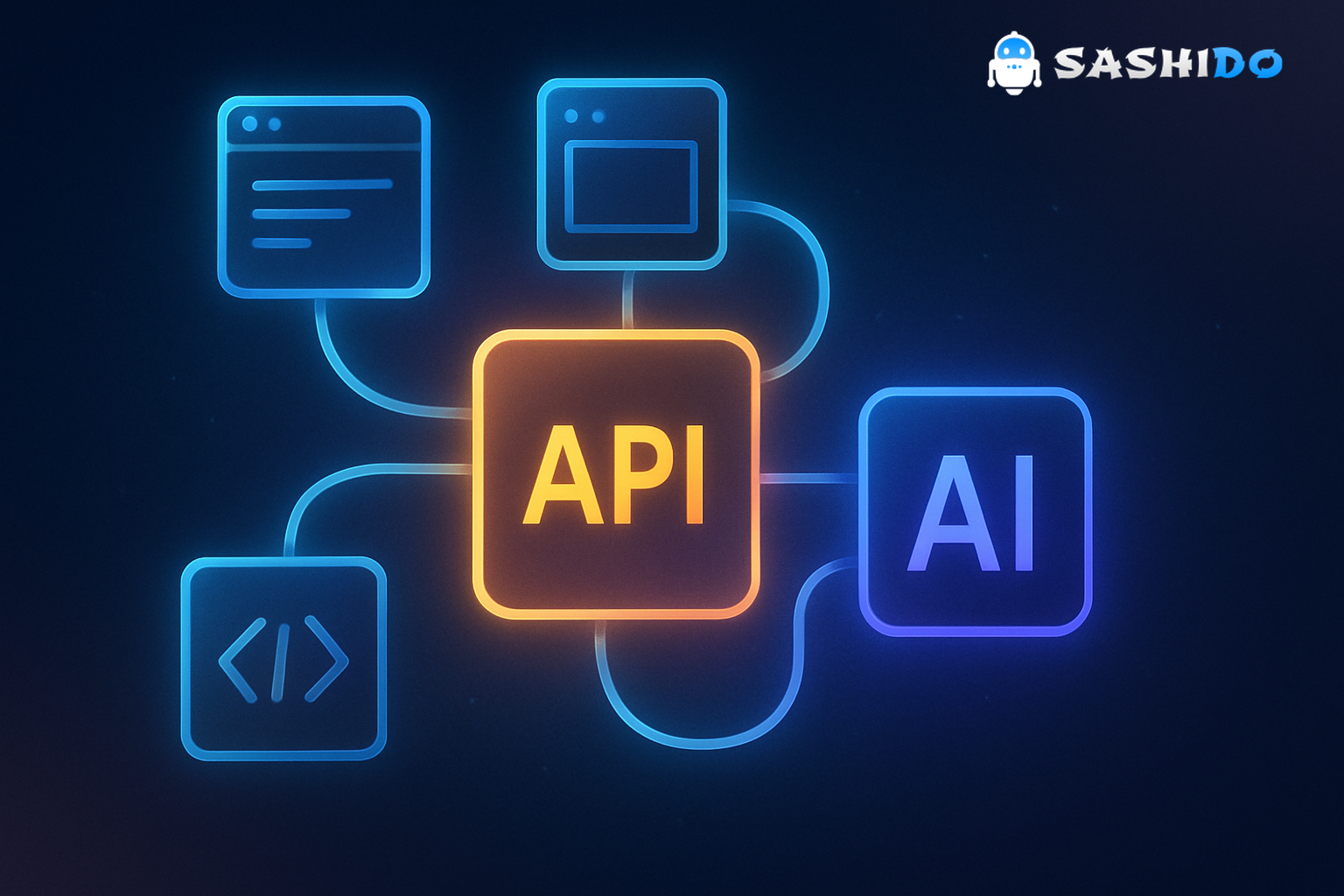
APIs used to be something you built after the “real app” was done. Now the pattern is flipped. When you develop application features for web, mobile, and AI-driven workflows, the API is the surface area that determines how fast you can ship, how safely you can change, and how well you can scale.
What we see in practice is simple. The teams that treat their API as a product. With clear contracts, predictable behavior, and operational guardrails. End up moving faster with fewer incidents, even when traffic spikes or the roadmap keeps shifting.
This matters whether you develop a cloud-based application for a startup, develop a SaaS application with partner integrations, or develop enterprise application workflows that must survive audits and internal change control. The competitive gap is rarely a single endpoint. It is the system behind it.
APIs Are the Foundation of Modern Digital Business
Most companies are already running a small ecosystem, even if they do not call it that. A customer-facing app, a payments provider, analytics, CRM, support tooling, an internal admin panel, and now a growing set of AI services. Without a consistent API layer, these systems drift into one-off integrations and “special cases” that nobody wants to touch.
A strong API strategy is what turns that sprawl into something you can reason about. It lets teams add or replace components without rewriting the whole stack. It also gives you a single place to enforce identity, permissions, rate limits, and observability.
The key principle is that APIs are not just data pipes. They define how your business logic is reused, governed, and evolved across products, teams, and partners.
Speed Wins When Your API Is Reusable, Not Rebuilt
The fastest teams do not “code faster”. They reuse more safely.
When your API exposes well-scoped capabilities. Authentication, billing state, entitlements, notifications, search, and audit events. You stop rebuilding those capabilities across every new surface. A web app can ship a feature without waiting for a separate mobile rewrite. An internal tool can rely on the same permission checks as the public product. A new integration can be added without cracking open the database.
This is why APIs are a speed multiplier during common moments that decide quarters. A pricing model change. A new region launch. An acquisition that forces you to integrate customer identities. The teams with modular APIs treat these moments as assembly work. The teams without them treat them as invasive surgery.
If you want a low-friction way to validate an API shape before you commit to months of implementation, you can prototype the endpoints and auth flows on a Parse-based backend like SashiDo - Parse Platform and see where clients and integrations get stuck.
Agility Comes From Loose Coupling and Clear Contracts
Agility shows up when things change under you. Regulations update your data retention requirements. A mobile release slips. A new enterprise customer demands SSO. A partner asks for events instead of polling.
API-driven systems handle this better because the API becomes a contract between moving parts. You can swap an internal service, change a queue, or add a new storage layer without forcing every client to update the same day. That contract does not need to be “perfect”. It needs to be explicit and stable.
In practice, the fastest way to lose agility is to let endpoints reflect internal tables or microservice boundaries too literally. That often feels efficient for the first release, then becomes painful once versioning, backward compatibility, and cross-team dependencies appear.
A simple discipline helps here. Design APIs around capabilities and workflows, not schema. Your database will change. Your workflows will survive longer.
Customer Experience Is an API Problem at Scale
When customers complain about “the app being slow” or “notifications being late,” it is often not a UI problem. It is an API and backend workflow problem.
Real customer experience at scale depends on predictable latency, sensible caching, consistent pagination, and failure behavior that client teams can handle. This is especially visible when you develop iOS application flows where network conditions are messy and background execution is limited. The same is true if you develop iPhone application experiences that rely on real-time updates like chat, delivery tracking, or collaborative editing.
The competitive advantage comes from removing the sharp edges that create user-visible glitches. Stale data after a purchase. Duplicate actions when a client retries. Confusing errors that cannot be resolved without contacting support.
A practical guideline is to define what “good” means, then enforce it. For example, for customer-facing reads, aim for predictable p95 latency targets and consistent response shapes across endpoints, even when features evolve. Consistency is what allows client teams to ship confidently.
Automation and Efficiency: The Hidden ROI of an API Service
APIs are not only for user-facing features. Many of the biggest wins come from internal automation.
If your operations team still copies data between systems, triggers manual refunds, or reviews repetitive onboarding steps, you are paying a “workflow tax” every day. An API service with the right primitives. Webhooks, background jobs, idempotent writes, audit logging. Turns those recurring tasks into stable integrations.
This is where the cost to develop an application often surprises teams. The first version is not the expensive part. The expensive part is the ongoing operational work when processes are not encoded into reliable APIs. When you quantify that toil. Hours per week, incident time, manual reviews. Investing in a robust API layer becomes an obvious business decision, not an engineering preference.
Scalability Without Chaos: Hosting an API for Growth
Growth breaks systems in predictable ways. More traffic, more integrations, more data, more concurrency, and more “background” work like notifications and sync.
The mistake is to treat scalability as a single switch you flip at 10x usage. It is a series of constraints you meet one by one.
When you are hosting an API, you want the platform concerns to be boring. Autoscaling that does not require manual tuning every week. Health checks you can trust. Logs that let you explain an outage in minutes, not days. A database plan that can handle both hot reads and consistent writes.
This is also where a “RESTful API” design either helps or hurts. If your RESTful API uses stable resource identifiers, consistent filtering, and predictable pagination, you can add caching and edge optimization without redesigning everything. If the API is a collection of bespoke endpoints with inconsistent semantics, scale work becomes a constant series of exceptions.
Scalability without chaos is rarely about a single technology choice. It is about operational repeatability.
Ecosystems, Partners, and Platform Effects
A strong API does more than serve your own clients. It creates optionality.
Once your core capabilities are exposed safely, you can let partners build on top of you, integrate into enterprise stacks, or support internal teams who want to automate their own workflows. This is how products start behaving like platforms.
The reason platforms compound is that you stop being the only team delivering value. Your partners, customers, and internal teams extend you. That only works when the API is documented, stable, and supported with predictable change management.
The trade-off is that public or partner APIs demand more discipline. You need versioning, deprecation policies, and rate limiting, plus a clear approach for secrets management and access scopes. If you skip those, ecosystem growth turns into support debt.
Reducing Technical Debt and Lock-In Risk
Technical debt is not just messy code. It is also the accumulation of irreversible decisions. Tight coupling between clients and internal storage. Unclear ownership of endpoints. Dependencies on proprietary features that are hard to move.
APIs reduce future risk when they are treated as an abstraction layer. You can modernize the internals, replace a legacy system, or split a monolith into services while clients keep working.
Vendor lock-in shows up most painfully when pricing or limits change right as your usage spikes. Many teams feel it when they move from prototype to production and discover hidden ceilings on requests, concurrency, or egress. If you are comparing backend-as-a-service options like Firebase, it is worth understanding the long-term portability trade-offs early. Here is our breakdown of the differences in SashiDo vs Firebase.
The general principle is to keep your API portable and your backend replaceable. Open standards for API descriptions and a backend foundation you can run in more than one place are practical ways to keep that option.
AI Needs APIs: Data, Tools, and MCP-Style Integrations
AI features are not “a model call”. They are a workflow.
A support assistant needs access to account status, recent events, and policy constraints. A content generator needs a review and publishing pipeline. A RAG setup needs controlled retrieval, caching, and permission checks. In all of these cases, APIs are the layer that makes AI safe, auditable, and connected to real systems.
We also see an emerging pattern where teams connect assistants to internal tools through standardized “tool calling” interfaces. That is the same underlying lesson. The assistant is only as reliable as the APIs behind its tools.
If you are experimenting with Model Context Protocol style server setups, the official Model Context Protocol documentation is useful because it frames these integrations as structured tool and context exchange, not ad-hoc glue.
How to Develop Application APIs That Stay a Competitive Advantage
When teams ask “how do I develop application infrastructure that keeps us ahead,” the answer is usually not more endpoints. It is better constraints.
Start With Contracts and Documentation That Match Reality
Teams move faster when contracts are explicit. The easiest way to keep contracts honest is to make the API description part of the development lifecycle. Not a document that gets updated “later.”
Using an industry standard like the OpenAPI Specification helps you align backend and client teams, generate client SDKs if you want, and catch mismatches early. The advantage is not the spec itself. It is the shared language it creates.
Design Security as a Default, Not a Feature
Most security failures in APIs are not exotic. They are missed authorization checks, broken object-level access, unsafe rate limits, and excessive data exposure.
The OWASP API Security Top 10 is a good practical checklist because it maps to real failures teams see in production. If you only adopt one habit, make it this. Every new endpoint must have an explicit authn and authz story, plus logging and rate limiting assumptions.
Bake In Operational Repeatability
Competitive advantage disappears when the team is on-call for brittle infrastructure every week. The API must be operable.
This is where cloud discipline matters even for small teams. The Twelve-Factor App guidelines are still relevant because they push you toward configuration in environment, stateless processes, and clean separation between build and run. That directly reduces the friction of scaling and incident response.
Version for Change, Not Perfection
Versioning is not about “v1, v2” branding. It is about controlling blast radius.
A practical approach is to avoid versioning until you must, then version at the boundary where you truly break compatibility. Combine that with a real deprecation policy. Announce, measure usage, provide a migration path, then remove. You will move faster long-term because clients will trust you.
Make Performance a Product Requirement
If you cannot explain your API latency and error rates, you cannot improve them. Instrument p50, p95, and p99 latency per endpoint, plus error rates by class. Track background job durations and queue lag if your system does async work.
This is where “better UX” becomes an engineering target. When your API gets faster and more predictable, product teams can build experiences that feel premium without constantly adding client-side hacks.
Quick Checklist Before You Call Your API Production-Ready
You do not need a massive governance program to get real benefits. This short checklist catches the issues that most often turn into incidents or slow releases:
- Ensure every endpoint has explicit authorization, not just authentication, and log denials.
- Keep response shapes consistent and document pagination, filtering, and error formats.
- Add idempotency for operations that can be retried safely under flaky networks.
- Put rate limiting in place early, even if the initial limits are generous.
- Monitor endpoint latency and background job lag, then tie alerts to user impact.
Where a Managed Parse Backend Fits When You Build for Speed and Control
Once the principles are clear, the platform decision becomes simpler. You are looking for something that keeps APIs portable, reduces operational toil, and scales predictably.
That is why we built SashiDo - Parse Platform on top of Parse Server’s open-source foundation. The upstream Parse Server documentation matters here because it is the portability anchor. You are not locked into a proprietary data and API model that cannot move.
In day-to-day work, our focus is to make “hosting an API” feel like a product capability, not a weekly DevOps project. We provide autoscaling, transparent usage-based pricing without hidden request caps, and GitHub integration so teams can ship changes with a tighter feedback loop. For teams adding AI features, we also keep the backend architecture compatible with the patterns that matter. Tool integrations, secure data access, and predictable latency.
Sources and Further Reading
- OWASP API Security Top 10
- OpenAPI Specification
- The Twelve-Factor App
- Model Context Protocol Documentation
- Parse Server Documentation
Frequently Asked Questions
How Do You Develop an Application?
To develop application features that scale, start by defining the workflow and data boundaries, then design the API contract, then implement backend logic and storage, then ship clients. The key is to treat the API as the product surface. That keeps web, mobile, partners, and AI tools aligned as you iterate.
What Does It Mean to Develop an App?
To develop an app is to deliver a working user experience plus the backend capabilities behind it. In modern products, the app is rarely standalone. It depends on identity, data sync, payments, notifications, and integrations. Those are usually delivered through APIs that must stay stable as the product evolves.
How to Develop an Application Step by Step?
A practical step-by-step flow is to define the use case and constraints, shape the API contract, implement core endpoints, add security and observability, then integrate clients, and finally harden performance and versioning. Teams that do this in order avoid late rewrites, because scalability and change management are built in early.
What Are the Four Steps in Developing an Application?
A useful four-step model is: design the API and data contracts, build and test the backend, integrate and ship client experiences, then operate and improve through monitoring and iteration. That last step is where competitive advantage compounds. The API becomes more reliable, more reusable, and easier to extend without breakage.
When Should I Use a Managed Backend Instead of Self-Hosting?
A managed backend is a good fit when uptime, scaling, and operational repeatability are critical, and you do not want to staff DevOps just to keep APIs stable. Self-hosting can make sense when you need deep infrastructure customization. The trade-off is more ongoing maintenance and slower iteration under load.
Conclusion: Competitive Teams Treat the API as the Product
When you develop application features in 2026, you are also developing an integration surface for web clients, mobile apps, internal tools, partners, and increasingly AI workflows. The API is the shared contract that turns change into iteration instead of disruption.
If you focus on reusable capabilities, explicit contracts, security defaults, and operability, you get the outcomes that show up as competitive advantage. Faster launches, fewer regressions, lower support burden, and the freedom to scale and evolve without chaos.
When you’re ready to move from prototype to production, explore SashiDo - Parse Platform for open-source Parse Server, transparent pricing, auto-scaling, and built-in AI readiness.
