Last Updated: July 07, 2026
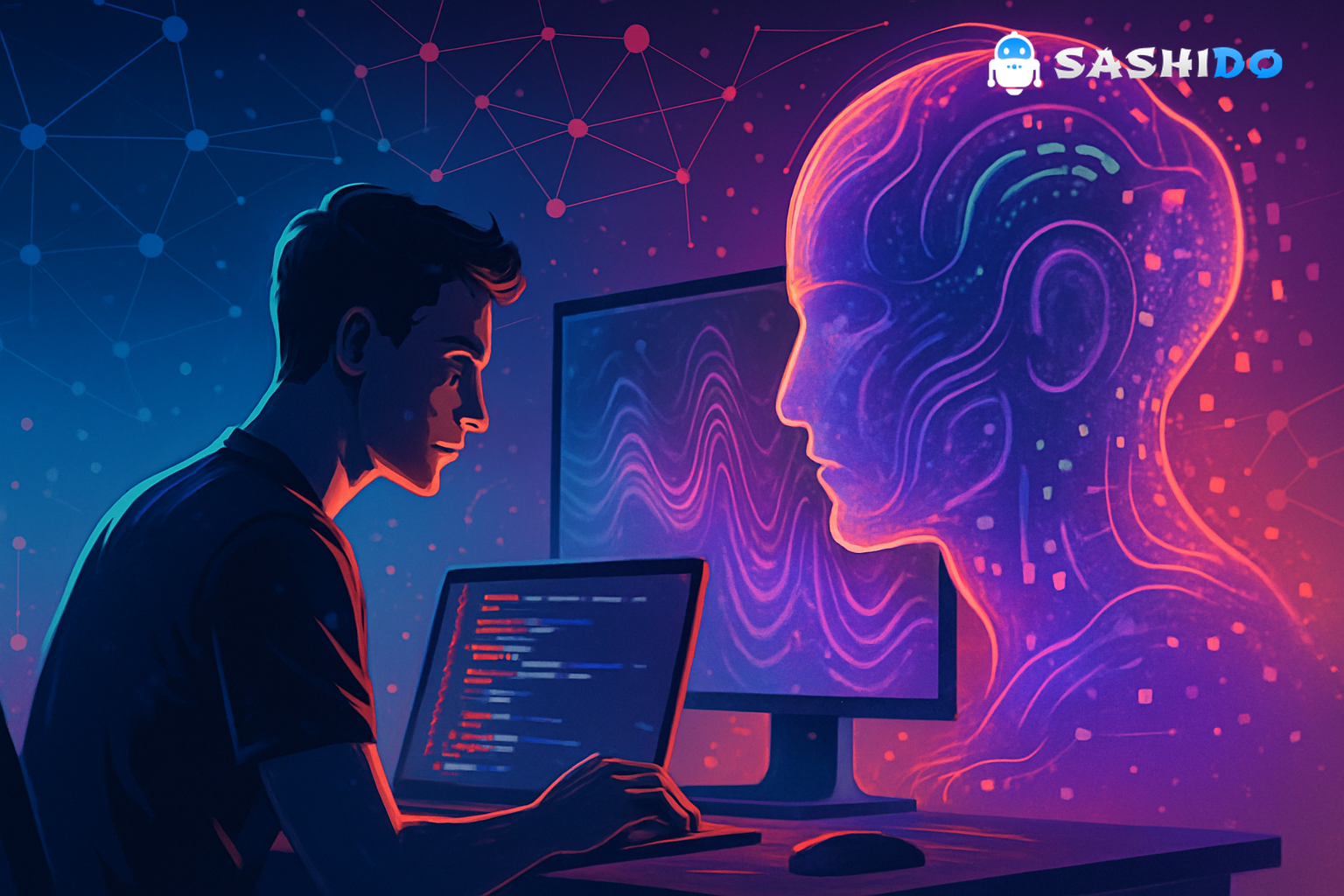
The last few years didn’t just give developers better autocomplete - they changed how we think about building software. Vibe coding
- describing what you want in natural language and letting AI generate the first draft of your code - has gone from curiosity to default workflow in many teams.
For AI-first startup founders, that shift is a mixed blessing. You can move from idea to prototype at unprecedented speed, but only if your AI infrastructure, backend, and team practices are ready for this new reality. Otherwise, you risk drowning in flaky agents, unreviewed pull requests, and infrastructure you never wanted to own.
This article looks at how vibe coding is reshaping development, what it means for developer jobs, and how to choose backend foundations that keep you fast, compliant, and free from vendor lock-in.
Understanding Vibe Coding: The New Paradigm in Software Development
What is Vibe Coding?
Vibe coding is the practice of expressing intent in natural language and delegating most of the implementation to generative AI:
- You describe the feature, constraints, and tech stack.
- An AI agent generates code, tests, migrations, and sometimes even documentation.
- You review, refine, and integrate the result.
The idea was popularized by technologists like Andrej Karpathy and amplified by the rise of models such as GPT‑4, Claude, and open-source LLMs. Instead of manually stitching together boilerplate for every CRUD endpoint or feature flag, you delegate the “obvious” work to AI and focus on architecture, correctness, and product.
In practice, vibe coding sits somewhere between:
- Classic coding - you write every line yourself.
- Low code / no code - you assemble building blocks in a visual tool.
- Agentic development - autonomous AI systems plan, code, and iterate with minimal human input.
Vibe coding keeps developers in the loop but changes where they spend their time: more on specifying intent and reviewing, less on typing.
The Rise of AI in Development
AI assistance is no longer a niche. GitHub reported that developers using Copilot complete tasks faster and with less cognitive load in controlled studies, even if total lines of code aren’t dramatically different in real teams.[1] Stack Overflow’s 2024 Developer Survey shows that a majority of professional developers now use AI tools at least occasionally in their workflow.[2]
At the same time, AI-generated code tends to be:
- More verbose, which increases the surface area for bugs and security issues.
- Confidently wrong in edge cases, especially around concurrency, security, and data governance.
- Harder to audit when entire modules appear in one shot.
So the story isn’t "AI replaces developers"; it’s "AI changes what competent developers do all day" - and how much your backend stack either amplifies or constrains that potential.
Implications of Vibe Coding on Developer Careers
Disruption to Traditional Roles
When AI can generate a reasonable backend service, migration script, or integration from a paragraph of instructions, junior developers are no longer primarily valued for how fast they can write boilerplate. That has ripple effects:
- Entry-level work (simple APIs, CRUD screens, integrations) is the part AI can most easily automate.
- Ticket-taker roles - just closing JIRA tickets without deep product ownership - are increasingly fragile.
- Review and debugging skills become more important than raw typing speed.
Industry data backs this up: CompTIA has reported steady demand for software roles overall but a sharper increase in postings that explicitly ask for AI skills or experience with AI-powered tools.[3] Companies like Anthropic say that their internal tools now write a large portion of production code, but humans still control architecture, review, and deployment.[4]
For developers, that means:
- Less "write this REST endpoint" work.
- More "design the system, define contracts, and ensure security and reliability" work.
New Opportunities in AI Development
The good news: vibe coding also expands the surface area of what small teams can ship.
Opportunities emerging for developers who lean into this shift include:
- AI-savvy architects - who know when to trust AI output, how to design systems that are testable, and how to structure repositories so agents can operate safely.
- Backend and AI infrastructure engineers - who integrate LLMs, vector stores, queues, and observability with robust backends and data governance.
- Specialists in testing and verification - who combine property-based testing, static analysis, and security review to make AI-generated code safe.
- Developer-experience builders - who create internal tools, templates, and workflows that let teams vibe code within guardrails.
Tools like Devin from Cognition Labs[5] illustrate where things are headed: AI agents that can run tasks end-to-end, from reading tickets to opening pull requests. Yet even there, the highest leverage work is designing the environment those agents operate in - the repos, services, APIs, and infrastructure.
For AI-first founders, your advantage isn’t just "we use AI"; it’s having a backend and workflow that let a tiny team safely orchestrate AI, ship AI-powered apps quickly, and avoid being crushed by technical or operational debt.
Choosing the Right Backend Solutions for Vibe Coding
Vibe coding shines when your backend architecture helps AI assistants produce code that is:
- Easy to reason about.
- Easy to test.
- Resilient under real-world load.
- Compliant with your regulatory constraints.
That’s where backend as a service and open-source platforms like Parse Server become strategic choices.
Benefits of Parse Server for AI Workflows
For AI-powered apps, especially in Europe, your backend needs to solve a specific set of problems:
- Authentication & authorization that can be reused across web, mobile, and AI agents.
- Structured data storage with flexible schemas for user data, prompts, logs, embeddings, and analytics.
- Real-time updates for collaborative tools, dashboards, and agent status tracking.
- Background and scheduled jobs for retraining, syncing with external systems, or running offline AI workflows.
- File storage for prompts, models, fine-tuning datasets, and generated assets.
Parse Server gives you these building blocks in a single, open-source backend:
- A unified data model and API layer (REST + SDKs) that your AI agents can target consistently.
- Cloud Code so you can centralize business logic server-side instead of scattering it across clients and ad-hoc functions.
- LiveQuery-style real-time subscriptions to power live dashboards, collaborative UI, or streaming AI status.
- Built-in access control that works across web, mobile, and server-side agents.
For European founders, pairing Parse Server with 100% EU infrastructure means you can keep data within the EU for GDPR-native compliance while still building global products. That’s critical when you’re logging prompts, user interactions, or model outputs that may include personal data.
Automation, AI Infrastructure, and “No DevOps”
Vibe coding does not remove the need for infrastructure - it just makes it painful when infrastructure is brittle.
When selecting a backend for AI-powered apps, look beyond the feature checklist and ask:
-
How much DevOps do we actually want to own?
-
Self-managed Kubernetes can be powerful but comes with on-call rotations, security patching, and capacity planning.
-
A managed backend with autoscaling and monitoring lets a tiny team stay focused on product.
-
Do we have vendor lock-in risk?
-
Many low code and proprietary BaaS platforms make it easy to start - and painful to leave.
-
Open-source backends like Parse Server reduce lock-in: you always have the option to host it yourself later.
-
Is the platform AI-ready by design?
You’ll likely need: -
Secure secrets management and environment isolation for LLM keys.
- Background jobs and queues for asynchronous workflows (batching calls to LLMs, retraining models, nightly data syncs).
- Real-time capabilities for live collaboration and agent observability.
-
Direct database access (for example, MongoDB) so you can plug in vector search, analytics, and custom pipelines.
-
Does it support global growth and sovereignty?
-
If you’re EU-based or serving EU customers, 100% EU infrastructure simplifies compliance discussions with customers and regulators.
- At the same time, global regions can reduce latency for non‑EU users.
Founders who align their AI infrastructure and backend early avoid a common anti-pattern: prototype quickly on a purely serverless or low-code stack, then hit a wall with compliance, costs, or control just as product-market fit appears.
Making Vibe Coding Work in Practice: A Founder’s Checklist
Here’s a practical checklist for AI-first teams that want to benefit from vibe coding without sacrificing quality or control.
1. Redefine “done” for AI-generated code
- Require tests for every AI-generated feature (even if the AI writes the first draft of the tests).
- Add static analysis, linting, and security scanning to your CI pipeline.[6]
- Treat AI as a junior engineer: it can propose implementations, but humans own the architecture and final decisions.
2. Tame complexity in your backend
- Keep your API surface predictable and well-documented so AI tools can understand and reuse existing patterns.
- Centralize business logic in a single backend layer (e.g., Cloud Code) instead of duplicating it across microservices prematurely.
- Use background jobs for heavy AI tasks so your main request paths stay fast and reliable.
3. Instrument everything
- Log prompts, model versions, and key decisions (without capturing unnecessary personal data).
- Add metrics and tracing so you know which AI workflows are slow or expensive.
- Build simple dashboards or admin panels, fed by real-time subscriptions, so your team can see what agents are doing.
4. Protect data and sovereignty from day one
- Decide explicitly where your data is allowed to reside and which model providers you can use.
- Keep core user and product data on EU-native infrastructure if you’re subject to GDPR.
- Use model providers that support data control and retention guarantees for enterprise use.[7]
5. Hire and grow for the new reality
- Prioritize developers who think like product engineers and systems designers, not just coders.
- Encourage the team to learn prompt engineering, AI evaluation, and reliable agent design.
- Treat AI fluency as a core competency but not a replacement for fundamentals in security, performance, and database design.
Future Outlook: Will Vibe Coding Replace Traditional Development?
Balancing AI and Human Expertise
Will vibe coding eventually replace traditional development? All available evidence suggests something more nuanced:
- AI will keep getting better at patterned work: CRUD APIs, typical integrations, well-trodden infrastructure recipes.
- Humans will remain essential for novel architecture, complex trade-offs, and risk decisions.
- The most valuable developers will be those who can design systems where AI is safe, auditable, and easy to plug in or swap out.
As tools mature, we’ll likely see more specialized models targeting narrow tasks (e.g., upgrading dependencies, hardening security, or refactoring legacy modules) instead of one general agent that “does everything.” That aligns with what many industry observers expect: AI as a powerful augmentor, not a drop-in replacement for engineering teams.[8]
Shaping Future Development Practices
For AI-first founders, the question is less "Will vibe coding take my team’s jobs?" and more "How do we structure our stack so we can benefit from vibe coding without losing control?"
Key principles to build around:
- Open, composable backends - so you can plug in new models, APIs, and tools without rewrites.
- Data sovereignty by default - so you can scale into regulated markets without re-architecting later.
- No-DevOps by design - so your limited engineering bandwidth goes into product, not babysitting clusters.
When your backend gives you scalable auth, database, files, real-time subscriptions, background jobs, and web hosting out of the box, vibe coding becomes a genuine accelerator instead of a source of fragile, half-integrated scripts.
If you’re at the stage where you want AI agents to generate APIs, run background jobs, and push new product experiments weekly, it can be worth adopting a backend platform that combines Parse Server’s openness with autoscaling, EU-native infrastructure, and built-in AI-readiness. Instead of assembling your own BaaS from scratch, you get a managed backend where Cloud Code, LiveQueries, background jobs, push notifications, direct MongoDB access, and global regions are already wired together - and you stay free from vendor lock-in.
One practical next step is to explore SashiDo’s platform as a managed Parse Server backend with 100% EU infrastructure, real-time capabilities, and AI-ready features that let you embrace vibe coding without hiring a DevOps team: explore SashiDo’s platform.
Conclusion: Vibe Coding as a Force Multiplier, Not a Silver Bullet
Vibe coding has undeniably changed how we build software. The winners in this new landscape won’t be those who throw out traditional engineering, but those who combine AI speed with solid backend foundations.
For AI-first startups, that means:
- Using vibe coding to accelerate delivery, not to bypass architecture.
- Choosing AI-ready backends that balance speed, compliance, and control.
- Investing in people and practices that keep quality, security, and data sovereignty front and center.
Handled well, vibe coding doesn’t replace developers - it amplifies them. Paired with the right backend infrastructure, it turns a small, focused team into a product engine that can compete with far larger organizations.
-
GitHub, "The Economic Impact of GitHub Copilot," research findings on developer productivity: https://github.blog/news-insights/research/the-economic-impact-of-github-copilot/ ↩
-
Stack Overflow Developer Survey 2024: https://survey.stackoverflow.co/2024/ ↩
-
CompTIA, "State of the Tech Workforce" report: https://www.comptia.org/content/reports/state-of-the-tech-workforce ↩
-
Anthropic, "Introducing Claude": https://www.anthropic.com/index/introducing-claude ↩
-
Cognition Labs, "Introducing Devin, the first AI software engineer": https://www.cognition-labs.com/blog/introducing-devin ↩
-
SonarSource, best practices for code quality and security: https://www.sonarsource.com/solutions/clean-code/ ↩
-
OpenAI, policies and enterprise data controls: https://openai.com/enterprise ↩
-
State of AI reports and analysis, e.g., https://www.stateof.ai/ ↩